
My first professional job was in forestry, as a timber cruiser in the Cascades. I measured the heights and diameters of trees to estimate forest product volumes in a geographic area. It is a statistical sampling activity I’d studied in school.
The job is physically exhausting. Cruisers hike to sample plots in straight lines determined by section maps and compass directions, never by walking on a road or convenient trail. They bushwhack in a systematic manner, fighting brush and terrain while counting consistent paces, then stick their striped survey pole victoriously when they reach plot center. They record heights and diameters of all the trees falling within a radius, penciling the measurements on waterproof cards which are saved for data entry.
Maybe because n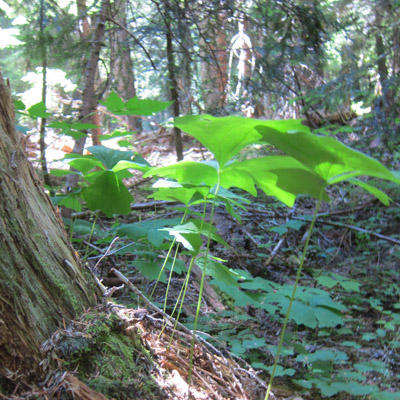 one of this was easy, we felt like a team. At day’s end we’d strip off our bulky vests and steel toed boots and drive rutted logging roads back to the office, embellishing our injury stories until they were near death tragedies, all to great laughter. There were possibly some short lived and disastrous chewing tobacco experiments, please don’t tell my kids.
It seemed so strange that all this exertion and camaraderie wasn’t actually relevant to the end goal of calculating a forest inventory. It was only the sideshow of collecting hard to reach data. My work product was only a stack of cards full of measurements, and that deck was the only value I added. But the rest of the experiences weren’t wasted, I banked them in memory and still draw from them. My best stories often start with “when I was a forester”.
Now that I’m creating painted spaces, I think back to skills I developed naturally in forestry. Just by scanning a dataset from one of those waterproof cards, I could visualize the forest it represented. I’d imagine massive Douglas firs alongside mossy logs, nestled in slopes of salal and fern. Or mucky ponds rimmed with willow and cottonwood. I could add the sounds I’d expect from the bird species that inhabit that forest type. I could even feel the sensations on my skin, the heat of an open area versus the damp cool of a boggy cedar grove.
My timber cruiser job was to condense the complex reality of the forest into lines of data on cards, an abstraction exercise. But I could use my imagination to generate a rich, satisfying representation from that data. This felt like creating a new reality when in fact it was just a different abstraction, existing only in my head. Resting with the crew on the truck ride back to the field office, I thought that was so amazing. I still do.